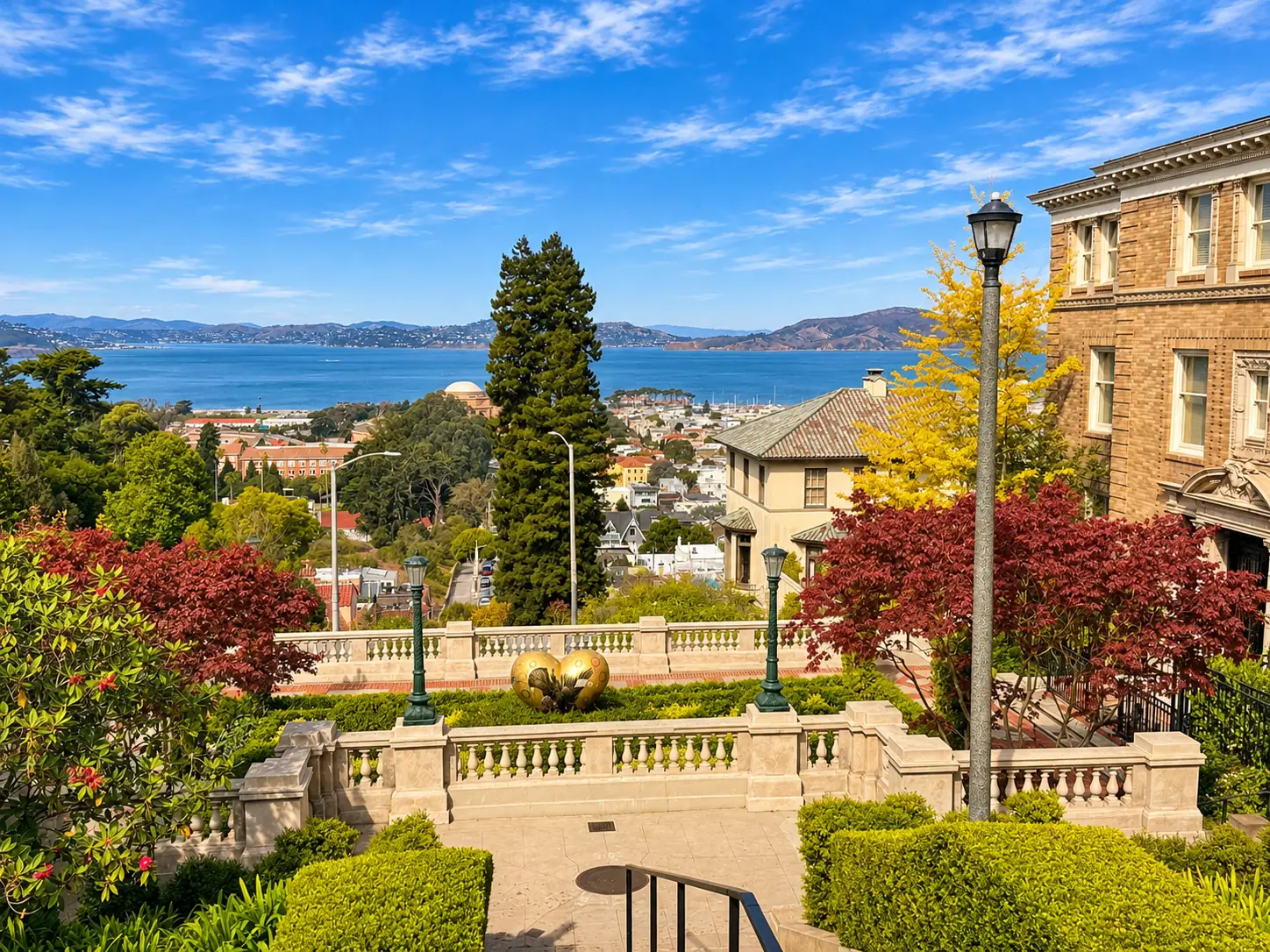
Pacific Heights rental properties require a leasing strategy tailored to the individual property, current market conditions, and San Francisco rental requirements.
The neighborhood includes grand pre-1979 apartment buildings and flats, luxury condominiums and co-ops, and single-family residences. Because these properties may be governed by different provisions of San Francisco and California rental law, successful leasing starts with identifying exactly what type of property is being offered.
PMI San Francisco provides professional leasing services for Pacific Heights rental owners, from rental pricing and property marketing to applicant screening, lease preparation, execution, and move-in coordination.
Our goal is to help owners bring their property to market using accurate pricing, professional marketing, consistent applicant procedures, and documentation tailored to the individual rental.
Leasing Rental Properties in Pacific Heights
Pacific Heights has one of San Francisco's most varied collections of residential properties.
Rental inventory includes large single-family homes, luxury condominiums, co-ops, classic two-to-four-unit flats, and larger apartment buildings. Many of the neighborhood's flats and apartment buildings date from before June 13, 1979, while other properties consist of individually owned condominiums or single-family residences.
That mix affects how each property should be leased.
A condominium near Lafayette Park may require a different leasing approach from a full-floor flat near Fillmore Street or a unit in a larger pre-1979 apartment building. Co-op properties may also involve board approval or subletting restrictions, while condominiums can be subject to HOA requirements that should be addressed before the property is offered for rent.
A property's regulatory treatment depends on more than its Pacific Heights location. Building age, property type, number of units, ownership structure, tenancy history, and applicable exemptions can affect which San Francisco and California rental requirements apply.
For example, many qualifying pre-1979 multi-unit properties are subject to San Francisco's local rent-control provisions. Some single-family homes and condominiums may be exempt from San Francisco's local price caps, but that does not necessarily exempt them from other San Francisco requirements or California's Tenant Protection Act.
This makes a property-specific leasing process particularly important in Pacific Heights.
PMI San Francisco begins by reviewing the individual rental, its features, building requirements, and current market position. From there, we help determine an asking rent, prepare the property for marketing, manage inquiries and applications, coordinate screening, prepare appropriate lease documentation, and coordinate the move-in process.
Marketing the Pacific Heights Location
Pacific Heights offers many objective property and location features that can help differentiate a rental listing.
Depending on the property, marketing may highlight proximity to:
Fillmore Street
Lafayette Park
Alta Plaza Park
The Presidio
Union Street
Van Ness Avenue
Public transportation
Nearby commercial and employment centers
Listings can also highlight property-specific features such as architectural details, views, outdoor space, parking, renovated interiors, storage, and building amenities.
PMI San Francisco focuses marketing on the property, architecture, location, transportation, amenities, and other objective features rather than demographic descriptions or assumptions about who should live there.
That approach can strengthen rental marketing while supporting fair housing compliance.
Why Professional Leasing Services Matter for Pacific Heights Property Owners
Leasing a Pacific Heights rental involves more than publishing an advertisement and selecting an applicant.
Decisions made before and during leasing can affect the tenancy for years after the resident moves in.
Establishing the Right Starting Rent
Rental pricing is particularly important in a neighborhood where property types and rental values vary significantly.
A renovated condominium with parking and bay views should not automatically be compared to an older apartment of the same bedroom count. Likewise, a large full-floor flat may compete with a very different group of rentals than a smaller unit in a multi-unit building.
Professional leasing starts with a property-specific market analysis rather than relying solely on neighborhood averages or a previous rental rate.
For properties subject to San Francisco rent control, establishing a lawful, market-supported initial rent at vacancy can have additional long-term importance because future annual increases may be restricted.
Understanding Which Rules Apply to the Property
Pacific Heights' varied housing stock makes broad assumptions risky.
A high-value property is not automatically exempt from San Francisco rental regulations because it is located in an affluent neighborhood. A pre-1979 multi-unit apartment building can remain subject to local rent-control requirements regardless of its market value.
Some qualifying single-family homes and condominiums may be exempt from San Francisco's local price caps.
Even when a property is exempt from the local rent cap, other requirements may still apply. These can include San Francisco Housing Inventory reporting, applicable just-cause protections, California's Tenant Protection Act, security deposit rules, required disclosures, fair housing requirements, and other state or local obligations.
PMI San Francisco therefore evaluates each property rather than assuming one regulatory framework applies to every Pacific Heights rental.
Creating a Consistent Applicant Process
Applicant management is another area where a consistent process matters.
PMI San Francisco uses consistent screening criteria and applicant procedures designed to align with applicable federal, California, and San Francisco housing requirements.
California law limits how certain applicant information may be considered, protects lawful sources of income including qualifying housing assistance, and establishes requirements governing application screening fees and applicant disclosures.
Using an established process helps reduce inconsistent decision-making and provides clearer documentation of how applications were handled.
Preparing the Lease Around the Actual Property
A generic rental agreement may not address every issue involved with a Pacific Heights property.
Depending on the rental, documentation may need to address:
HOA requirements
Co-op rules
Parking
Storage
Utilities
Shared areas
Building access
Property-specific policies
Required state and local disclosures
Security deposit terms
Beginning the tenancy with accurate documentation can help reduce confusion over what was included with the rental and which responsibilities were established when the lease was signed.
Building a Stronger Record From Day One
Professional leasing also supports continuity.
The rental listing, applications, lease documents, deposit information, move-in records, and property condition documentation form part of the property's management history.
For owners of older buildings, multiple units, or properties subject to San Francisco rental regulation, maintaining those records can become increasingly important as the tenancy continues.
PMI San Francisco's leasing process is designed to give Pacific Heights property owners an organized foundation from vacancy preparation to move-in, with the option to continue directly into full-service property management.
How San Francisco Rental Laws Apply to Pacific Heights Rental Properties
Pacific Heights does not have a neighborhood-specific rent ordinance. Rental properties are governed by San Francisco's citywide requirements and applicable California law.
How those rules apply varies by property.
That distinction is especially important in Pacific Heights because the neighborhood includes a wide range of older apartment buildings and flats, condominiums, co-ops, and single-family residences. A property's age, number of units, ownership structure, tenancy history, and regulatory status can affect the requirements that apply.
Rent Control Depends on the Property
Many Pacific Heights apartment buildings and multi-unit flats were constructed before June 13, 1979. Qualifying units in these buildings are generally subject to San Francisco's local rent-control provisions.
For covered units, the annual allowable rent increase is 1.6% for increases effective March 1, 2026 through February 28, 2027.
Single-family homes and condominiums may be exempt from San Francisco's local price caps depending on the property and tenancy. That exemption does not automatically mean the property is outside all rent regulation.
California's Tenant Protection Act, commonly known as AB 1482, may still apply depending on factors such as the property's age, ownership structure, and whether the required exemption notice has been provided.
For properties covered by AB 1482 rather than San Francisco's local rent cap, California's statewide rent-increase limits and other applicable requirements must also be considered.
Pacific Heights co-ops can add another layer because building or board restrictions may affect whether and under what conditions a unit can be rented.
Rental regulations should be evaluated based on the individual property rather than the neighborhood's reputation, value, or ZIP code.
San Francisco Just-Cause Protections
San Francisco's just-cause requirements apply to most residential rental properties, including many apartments, condominiums, and single-family residences.
A property's exemption from San Francisco's local rent cap does not necessarily mean it is exempt from the city's just-cause protections.
PMI San Francisco takes a compliance-focused approach to leasing and ongoing management. When a matter requires legal advice or legal action, owners should work with a qualified California landlord-tenant attorney.
PMI does not conduct evictions or provide legal representation.
Housing Inventory and Rent Board Requirements
San Francisco requires residential property owners to report unit information through the Rent Board's Housing Inventory program.
The requirement applies broadly, including to many properties that are not subject to San Francisco's local rent cap.
The annual Housing Inventory reporting deadline is March 1.
For covered units, owners also need a current Rent Board license before an annual allowable or banked rent increase can take effect.
The annual Rent Board fee is also due March 1, with applicable exemptions handled according to Rent Board procedures.
For a Pacific Heights owner with multiple units or an older, larger building, maintaining accurate property and tenancy records can help keep compliance records organized from one year to the next.
Security Deposits and San Francisco Deposit Interest
California generally limits residential security deposits to one month's rent.
A limited exception may allow certain qualifying small landlords to collect up to two months' rent, depending on ownership structure and other statutory requirements.
San Francisco also requires interest on qualifying residential security deposits held for at least one year, subject to applicable exceptions.
The San Francisco security deposit interest rate is 4.2% for March 1, 2026 through February 28, 2027.
These requirements may apply even when a rental is exempt from San Francisco's local rent cap, so owners should avoid treating “rent-control exempt” as meaning “exempt from San Francisco rental regulations.”
Applicant Screening Requirements
California and San Francisco impose important requirements on rental applicant screening.
California law regulates application screening fees, disclosure of screening criteria, applicant processing procedures, consumer credit information, and the handling of certain criminal-history information.
Housing providers should apply consistent, lawful screening criteria rather than subjective applicant preferences.
California also protects lawful sources of income, including qualifying housing assistance such as Section 8 Housing Choice Vouchers.
San Francisco's Fair Chance Ordinance imposes additional criminal-history restrictions in covered affordable housing. Other California fair housing requirements can also restrict how criminal history is used in residential screening.
PMI San Francisco uses a consistent screening process designed to align with applicable federal, state, and local requirements.
Building-Specific Requirements Also Matter
Pacific Heights has many older multi-unit buildings.
San Francisco Housing Code Section 604 contains inspection and reporting requirements for qualifying weather-exposed exterior elements in certain apartment and condominium buildings with three or more dwelling units.
Depending on the building, covered elements can include exterior decks, balconies, stairs, landings, and similar components.
Larger Pacific Heights buildings may also have elevators, boilers, older building systems, and other maintenance and inspection requirements that owners must manage separately from leasing.
PMI San Francisco can help coordinate property documentation and applicable inspection needs, while inspections that require licensed professionals should be performed by appropriately qualified providers.
The information provided here is for general informational purposes only and is not legal advice. Rental laws and regulations can change, and their application depends on the individual property and tenancy. Property owners should consult a qualified California landlord-tenant attorney regarding specific legal questions.
Our Leasing Process for Pacific Heights Rental Owners
A successful leasing process starts before the property is advertised.
PMI San Francisco uses a structured approach designed to help Pacific Heights owners move from vacancy preparation to lease signing and move-in with clearer documentation and less administrative burden.
1. Review the Property
The process starts with the rental itself.
We review factors such as:
Property type
Number of units
Building age
Unit size and layout
Property condition
Renovations and finishes
Parking
Storage
Outdoor areas
Building amenities
HOA or co-op requirements
Applicable rental regulations
This property-specific review is particularly important in Pacific Heights.
A condominium in a newer building should not automatically be handled like a pre-1979 flat, an individually owned co-op, or a unit in a larger controlled apartment building.
2. Evaluate Current Rental Competition
PMI San Francisco reviews comparable rental activity and current market conditions before recommending an asking rent.
The analysis considers both the broader Pacific Heights market and the features that distinguish the individual property.
Rather than relying on a broad neighborhood average, we look at comparable properties that closely match the rental being offered.
3. Prepare and Market the Property
Once the property is ready, PMI San Francisco prepares the rental listing and manages its marketing.
Depending on the property, marketing may highlight:
Architecture
Interior condition and finishes
Views
Parking
Outdoor space
Storage
Building amenities
Proximity to Fillmore Street
Lafayette Park and Alta Plaza Park
Presidio access
Transportation
Nearby commercial corridors
Rental marketing focuses on objective property and location characteristics and avoids demographic descriptions or preferences that may raise fair housing concerns.
4. Manage Inquiries, Showings, and Applications
PMI San Francisco coordinates inquiries and showings and provides applicants with a consistent application process.
Applications are evaluated using established qualification standards and applicable screening requirements.
Using a repeatable process provides clearer documentation and reduces the risk of inconsistent treatment from one applicant to another.
5. Screen Applicants Under Applicable Requirements
Applicant screening may include a review of lawful financial qualifications, income documentation, rental history, credit information, and other permitted criteria.
The process must also account for California and San Francisco requirements governing application screening, protected sources of income, fair housing, and criminal-history information.
PMI San Francisco applies its screening process consistently rather than making decisions based on subjective impressions about applicants.
6. Prepare Lease and Move-In Documentation
After an applicant is approved, PMI San Francisco prepares the lease package for the property and applicable requirements.
Depending on the rental, documentation may address:
Rent and payment terms
Security deposit
Parking
Storage
Utilities
HOA or co-op requirements
Shared areas
Building policies
Applicable addenda
Required disclosures
PMI San Francisco then coordinates lease execution and move-in documentation to create a clear record of the tenancy from the beginning.
Setting the Right Rent for a Pacific Heights Rental Property
Pacific Heights has some of San Francisco's highest asking rents, but pricing a rental successfully requires more than adding a premium simply because of the neighborhood.
The neighborhood's housing stock varies significantly.
A renovated condominium with parking, outdoor space, and bay views may compete in a different segment from a one-bedroom unit in an older apartment building. A full-floor flat may also have a different rental profile from a similarly sized unit in a larger multi-unit property.
Property-specific comparisons are therefore more useful than broad neighborhood averages.
What Can Affect Rental Value in Pacific Heights?
PMI San Francisco considers factors such as:
Number of bedrooms and bathrooms
Square footage
Floor plan
Interior condition
Renovation quality
Natural light
Views
Parking
Laundry
Outdoor space
Storage
Elevator access
Building amenities
Architectural features
Exact location
Current competing inventory
Seasonal market conditions
Two properties within a few blocks of each other can command very different rents based on these characteristics.
Why Starting Too High Can Hurt
Owners understandably want to maximize rental income.
But an asking rent that is substantially above comparable properties can lead to fewer inquiries, fewer showings, and a longer vacancy.
The financial effect of vacancy may outweigh the benefit of holding out for a modestly higher monthly rent.
A property that remains listed for an extended period may later require price adjustments after competing rentals have already leased.
The objective is not simply to set the highest possible asking price. It is to establish a market-supported price that positions the property competitively when it enters the market.
Why Starting Too Low Can Matter Too
Underpricing creates a different problem.
For qualifying rent-controlled Pacific Heights properties, the lawful initial rent established at the beginning of a new tenancy can have long-term financial consequences because future annual increases may be limited.
That makes vacancy pricing especially significant for the neighborhood's substantial inventory of older apartments and multi-unit flats.
A pricing decision made today may affect the property's rental income for years.
Current Market Data Matters
Rental market conditions change.
Inventory, seasonality, competing listings, property condition, and broader San Francisco market activity can influence what a renter is willing to pay at a particular time.
For that reason, PMI San Francisco bases pricing recommendations on current comparable properties and market conditions rather than relying solely on historical rents or neighborhood-wide estimates.
Any published Pacific Heights rent ranges should be verified against current market data before publication because asking rents can change rapidly.
The goal is a starting rent that reflects the property's current market position while accounting for the regulatory framework that may affect future increases.
Lease Preparation, Required Disclosures and Move-In Documentation
A well-prepared lease does more than establish the monthly rent. It creates a clear written record of the tenancy, defines important property-specific terms, and documents the responsibilities agreed upon before the resident takes possession.
For Pacific Heights rental owners, this is especially important because properties in the neighborhood vary widely in age, ownership structure, amenities, and regulatory treatment.
A condominium may involve HOA rules. A co-op may have board or subletting requirements. A classic flat may include shared areas, storage, or parking arrangements. An older apartment building may have additional San Francisco documentation and compliance considerations.
PMI San Francisco prepares leasing documentation for the individual property and the requirements that apply to it.
Property-Specific Lease Terms
The appropriate lease package depends on the property.
Depending on the property, documentation may address:
Monthly rent and payment terms
Security deposit amount
Parking and garage use
Storage areas
Utilities and payment responsibilities
Laundry facilities
Building access
Common-area use
HOA requirements
Co-op rules
Building-specific policies
Applicable addenda
Required disclosures
Clear documentation at the start of the tenancy can help reduce later confusion about what was included with the rental and which responsibilities were agreed upon.
For example, parking can be an important feature of a Pacific Heights rental. If a garage space, driveway space, or other parking arrangement is included, the lease documentation should clearly establish the applicable terms rather than leaving the arrangement undocumented.
San Francisco and California Disclosures
Rental housing in San Francisco may require disclosures and notices beyond those included in a generic national lease form.
The requirements depend on factors such as the property's age, building type, regulatory status, and characteristics of the tenancy.
PMI San Francisco's leasing process incorporates applicable state and local documentation requirements rather than assuming every property needs the same lease package.
Because rental requirements change, documentation should be reviewed and updated as requirements change.
Security Deposit Documentation
California generally limits residential security deposits to one month's rent, although a limited exception may apply to certain qualifying small landlords.
San Francisco also requires interest on qualifying residential security deposits held for at least one year, subject to applicable exceptions.
For the period March 1, 2026 through February 28, 2027, San Francisco's security deposit interest rate is 4.2%.
The lease and supporting records should clearly document the security deposit collected at the beginning of the tenancy.
Accurate deposit documentation is valuable at move-in and throughout the tenancy and when the rental relationship eventually ends.
Documenting the Property at Move-In
Move-in documentation records the property's condition when occupancy begins.
This is particularly valuable for Pacific Heights rentals with:
Hardwood flooring
Renovated kitchens and bathrooms
Built-in cabinetry
High-end appliances
Architectural details
Outdoor areas
Parking
Storage
Specialty finishes
Building amenities
Documenting the property at the beginning of the tenancy provides a clearer reference point for both the owner and the resident.
PMI San Francisco coordinates move-in documentation as part of the leasing process so that key property information is recorded from the start.
Creating a Stronger Start to the Tenancy
The leasing process establishes the foundation for the tenancy that follows.
Accurate documents, clearly defined terms, organized records, and appropriate disclosures can make ongoing property management more efficient and reduce avoidable uncertainty.
For owners who continue with full-service property management, the records created during leasing can flow directly into ongoing rent collection, maintenance coordination, accounting, communication, and lease administration.
Benefits of Professional Leasing Services in Pacific Heights
Professional leasing services provide more than assistance with filling a vacancy.
For Pacific Heights property owners, the value lies in combining local rental-market knowledge with a consistent process for pricing, marketing, applicant management, documentation, and move-in coordination.
More Accurate Rental Positioning
Pacific Heights rental values can vary significantly among properties with the same bedroom count.
Views, parking, renovations, outdoor space, architectural features, floor plan, building type, and exact location can affect rental value.
PMI San Francisco evaluates current competition alongside the individual property before recommending an asking rent rather than relying solely on neighborhood-wide averages or historical rent.
Professional Property Marketing
Effective rental marketing starts with the actual features of the property.
Depending on the rental, PMI San Francisco can emphasize objective attributes such as:
Interior condition and finishes
Architectural character
Views
Parking
Outdoor space
Storage
Building amenities
Proximity to Fillmore Street
Lafayette Park
Alta Plaza Park
Presidio access
Transportation options
Marketing focuses on the property and location rather than descriptions of preferred residents or demographic characteristics.
A Consistent Application Process
Managing applicants involves more than collecting application forms.
California and San Francisco rental requirements affect how applicants may be evaluated, what information may be considered, how screening fees are handled, and how qualification standards should be applied.
PMI San Francisco uses an established applicant process to promote consistency from one application to another.
That helps owners avoid informal applicant decisions and provides clearer documentation of the leasing process.
Lease Documentation Matched to the Property
Pacific Heights housing is too varied for a one-size-fits-all leasing approach.
A condominium, co-op, single-family residence, two-unit flat, and larger apartment building can present different leasing considerations.
Professional lease preparation helps ensure the documentation reflects the property actually being rented, including applicable building rules, parking arrangements, utilities, disclosures, and other relevant terms.
Less Administrative Work for the Owner
Leasing a property requires significant time and coordination.
The process can include:
Evaluating market rent
Preparing the property for listing
Creating rental marketing
Managing inquiries
Coordinating showings
Processing applications
Screening applicants
Preparing lease documents
Coordinating signatures
Documenting deposits
Organizing move-in
PMI San Francisco coordinates these steps within one leasing process so property owners do not have to manage each task separately.
Better Continuity After Move-In
A professionally managed leasing process can also simplify ongoing property management.
The rental pricing analysis, application records, lease, disclosures, deposit information, and move-in documentation establish a management record from the start.
For owners who choose full-service property management, those records can stay with the same management team rather than being transferred to another company after the property is leased.
Why Pacific Heights Property Owners Choose PMI San Francisco
Pacific Heights rental properties can be substantial investments, and the neighborhood's varied housing stock creates varied management needs.
Owners may be leasing a condominium, a co-op, a single-family residence, a classic two-to-four-unit flat, or a larger pre-1979 apartment building.
PMI San Francisco combines local market knowledge with professional leasing systems designed for San Francisco rentals.
Understanding Pacific Heights Housing
The type of property affects the leasing process.
Building age and property type can affect regulatory requirements. HOA and co-op rules can affect the leasing process. Parking, views, architectural character, and building amenities can influence rental value.
PMI San Francisco evaluates each property individually rather than assuming every Pacific Heights rental should be priced, marketed, or documented the same way.
Familiarity With San Francisco's Rental Environment
San Francisco rental ownership includes requirements that extend beyond the initial lease.
Depending on the property, owners may need to account for:
Rent Board Housing Inventory reporting
Rent-control requirements
Applicable statewide rent regulations
Just-cause protections
Security deposit requirements
Security deposit interest
Applicant-screening requirements
Required disclosures
Building-related compliance obligations
PMI San Francisco incorporates applicable requirements into its leasing and property management procedures and refers matters when appropriate to a qualified attorney or other licensed professional.
PMI does not provide legal representation or conduct evictions.
Organized Leasing Systems
A consistent process can make San Francisco's complex leasing environment easier to manage.
PMI San Francisco uses established procedures for:
Property review
Rental pricing
Marketing
Inquiry management
Showings
Applications
Screening
Lease preparation
Lease execution
Move-in coordination
Documentation
The result is a more organized process from vacancy preparation through occupancy.
Support Beyond Leasing
Some owners want professional help finding and placing a resident but plan to manage the property afterward.
Others prefer to delegate the ongoing responsibilities as well.
PMI San Francisco can provide leasing services as part of a broader property-management relationship that may include rent collection, resident communication, maintenance coordination, accounting, reporting, lease administration, and coordination of property inspection needs.
This allows owners to work with the same management team from initial vacancy through ongoing ownership.
Local Service With Professional Property Management Systems
Pacific Heights owners need local knowledge and also benefit from established systems and consistent communication.
PMI San Francisco combines San Francisco market familiarity with the processes and resources of the PMI property management network.
The goal is to provide rental owners with a professional, organized approach to leasing while offering a clear path to full-service management when additional support is needed.
PMI San Francisco | PMI San Francisco brokered by CH Clovers, Inc. - CA DRE# 02037188.
From Leasing Services to Full-Service Property Management
Leasing a Pacific Heights rental property is only one part of managing a successful rental.
After the resident moves in, day-to-day responsibilities continue. Owners may still need to manage rent collection, resident communication, maintenance coordination, accounting, documentation, regulatory deadlines, lease administration, inspections, and future vacancy planning.
For owners who prefer a more hands-off approach, PMI San Francisco can continue beyond leasing with full-service property management.
One Team From Vacancy Through Ongoing Management
Keeping leasing and ongoing management with the same company can provide greater continuity.
The property information, application records, lease documents, deposit records, move-in documentation, and other materials established during the leasing process can transfer directly into ongoing management.
Depending on the property and management agreement, full-service property management may include:
Rent collection
Resident communication
Maintenance coordination
Owner accounting and reporting
Lease administration
Regulatory tracking
Inspection coordination and documentation
Vendor coordination
Renewal coordination
Vacancy and re-leasing services
For Pacific Heights properties subject to San Francisco rent regulation, maintaining organized records can be especially important over the life of the tenancy.
Management That Reflects the Property
A Pacific Heights condominium has different management needs from a large pre-1979 apartment building.
Condominium owners may need coordination with an HOA. Co-op rentals may involve board requirements. Older multi-unit properties may require more extensive compliance tracking and building-related coordination.
PMI San Francisco tailors ongoing management to the individual property's characteristics while using consistent systems for communication, accounting, maintenance, and documentation.
Compliance-Focused Ongoing Management
San Francisco rental requirements change over time.
Depending on the property, ongoing management may involve tracking Rent Board requirements, Housing Inventory reporting, applicable rent regulations, security deposit requirements, inspection needs, lease documentation, and other property-management obligations.
When a matter requires legal advice, legal representation, or legal action, PMI San Francisco coordinates with qualified outside professionals as appropriate.
PMI San Francisco does not provide legal representation or conduct evictions.
For owners who want ongoing assistance after the property has been leased, full-service management allows owners to keep the property with the same professional management team from vacancy through the ongoing tenancy.
Frequently Asked Questions About Leasing Services in Pacific Heights
What is included with leasing services for a Pacific Heights rental property?
PMI San Francisco's leasing process can include property review, rental pricing, marketing, inquiry management, showings, applicant screening, lease preparation, lease execution, and move-in coordination.
The exact process varies based on the property, ownership structure, building requirements, and applicable San Francisco and California regulations.
Are Pacific Heights rental properties subject to San Francisco rent control?
Pacific Heights does not have a separate rent-control ordinance.
San Francisco's citywide rules apply according to the individual property's characteristics.
Many qualifying apartments and multi-unit flats built before June 13, 1979 are subject to San Francisco's local rent-control provisions.
For covered units, the allowable annual rent increase is 1.6% for increases effective March 1, 2026 through February 28, 2027.
Some qualifying single-family homes and condominiums may be exempt from San Francisco's local price caps, but other San Francisco requirements and California's Tenant Protection Act may still apply depending on the property and tenancy.
Are Pacific Heights single-family homes and condos exempt from rental regulations?
Not always.
Some qualifying single-family homes and condominiums may be exempt from San Francisco's local rent cap, but exemption from local price controls does not mean exemption from all rental regulations.
Housing Inventory reporting, applicable just-cause requirements, California rent regulations, security deposit rules, fair housing requirements, screening laws, and required disclosures may still apply.
The proper analysis depends on the individual property.
How much should I charge for rent in Pacific Heights?
No single rental rate accurately represents every Pacific Heights property.
Rental value can depend on:
Property type
Number of bedrooms and bathrooms
Square footage
Condition
Renovations
Views
Parking
Outdoor space
Storage
Building amenities
Exact location
Current competing listings
Seasonal market conditions
PMI San Francisco reviews current comparable rental activity and the individual property's features before recommending an asking rent.
For properties subject to rent control, establishing an appropriate lawful rent at the beginning of a new tenancy can be particularly important because future increases may be limited.
How does PMI San Francisco screen rental applicants?
PMI San Francisco uses an established applicant-screening process based on consistent qualification standards and applicable federal, California, and San Francisco requirements.
Screening may include a lawful review of financial qualifications, income documentation, rental history, credit information, and other permitted criteria.
California law regulates several aspects of the applicant-screening process, including screening fees, protected sources of income, fair housing protections, and the use of certain applicant information.
PMI San Francisco applies its screening standards consistently instead of relying on subjective assumptions about applicants.
Does San Francisco require landlords to register rental properties?
San Francisco requires residential property owners to report unit information through the Rent Board Housing Inventory program.
The requirement applies broadly, including to many owner-occupied properties, condominiums, single-family homes, vacant units, and properties that are exempt from San Francisco's local rent cap.
The annual reporting deadline is March 1.
Does San Francisco require interest on security deposits?
San Francisco requires interest on qualifying residential security deposits held for at least one year, subject to applicable exceptions.
The security deposit interest rate is 4.2% for March 1, 2026 through February 28, 2027.
California also generally limits residential security deposits to one month's rent, although a limited exception may apply to certain qualifying small landlords.
Can PMI San Francisco manage my property after it is leased?
Yes.
Owners can use PMI San Francisco for leasing services and continue with full-service property management after move-in.
This can provide continuity from rental pricing, marketing, and applicant screening into rent collection, resident communication, maintenance coordination, accounting, lease administration, and other ongoing management responsibilities.
Get Started With Pacific Heights Leasing Services
Pacific Heights rental properties require more than a generic leasing approach.
The neighborhood's combination of older apartment buildings, classic flats, condominiums, co-ops, and single-family residences means pricing, marketing, documentation, and regulatory requirements should be evaluated on a property-by-property basis.
PMI San Francisco provides professional leasing services designed to help owners move from vacancy to occupancy through a structured process that includes market analysis, property marketing, applicant management, screening, lease preparation, and move-in coordination.
For owners who want additional support after the lease is signed, PMI San Francisco also offers full-service property management.
Working with one management team can provide continuity from the initial vacancy through the ongoing tenancy.
PMI San Francisco | PMI San Francisco brokered by CH Clovers, Inc. - CA DRE# 02037188.
The information on this page is provided for general informational purposes only and is not legal advice. Rental laws and regulations change, and their application depends on the individual property and tenancy. Property owners should consult a qualified California landlord-tenant attorney regarding specific legal questions.